A dining room chandelier should make food, faces, and the table easy to see without turning dinner into a brightly lit showroom. Lumens describe the amount of visible light a source produces; watts describe energy use. That distinction matters, especially when comparing modern LED bulbs with older bulbs. A high lumen number alone does not guarantee comfortable light. The fixture’s shades, bulb direction, ceiling height, and placement all affect what reaches the table.
How many lumens do I need for a dining room chandelier? There is no single answer that suits every room. Room size, table dimensions, wall colors, and other light sources change the result. A small dining nook with pale walls may feel bright with less light than a large room with dark finishes. The chandelier also shares the job with nearby sconces or recessed lights. Think of its output as part of the room’s overall lighting, not the whole plan.
A useful starting point is to consider the room’s general lighting needs, then choose a chandelier that can be dimmed for meals and brighter tasks. Check the fixture’s maximum rated wattage and bulb compatibility before buying. A dimmer helps, but it cannot fix a poorly placed fixture or harsh, exposed bulbs. Small details matter. Even a carefully chosen lumen target is only an estimate; lived-in rooms rarely behave exactly like a lighting chart. The following guide explains how to make that estimate more practical, comfortable, and specific to your dining space.
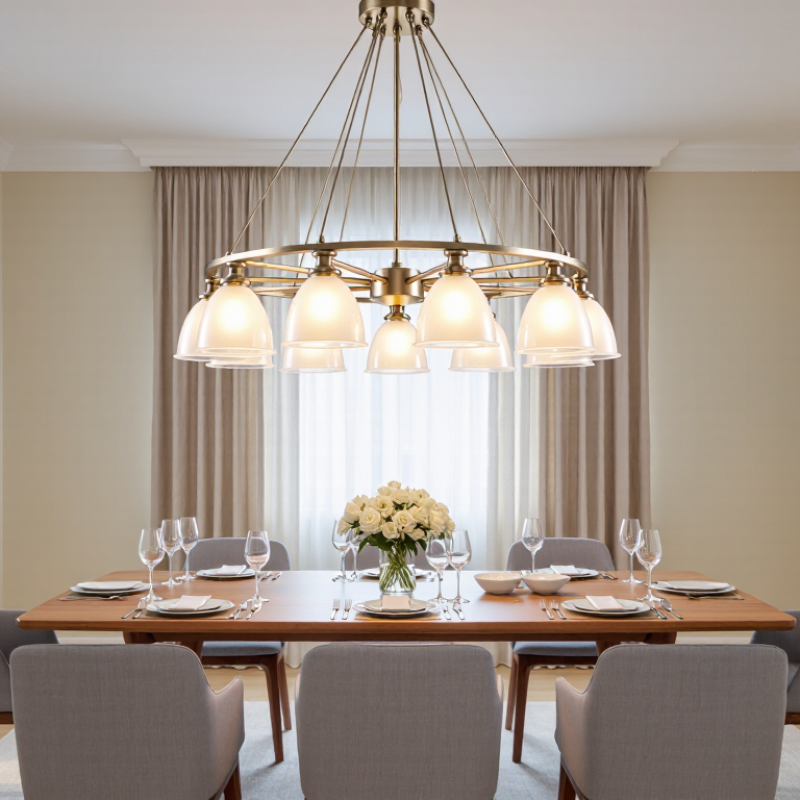
Lumens measure the total visible light a chandelier emits, not how bright the dining table will feel. The U.S. Department of Energy’s Lighting Facts guidance uses lumens to describe light output and watts to describe power use. More lumens generally mean more emitted light. That is the basic distinction.
But lumens are only part of the picture. The Illuminating Engineering Society distinguishes a source’s light output from illuminance on a surface, measured in lux or foot-candles. A chandelier’s height, shade shape, bulb direction, and room finishes all affect how much light reaches the table. A dark shade can hide useful output. A pale tabletop may reflect it back into the room. Small details matter.
For example, two chandeliers rated at 1,600 lumens can create very different scenes. One may spread light widely; another may concentrate it in a bright pool over the centerpiece. IES lighting guidance evaluates illumination at the task surface, rather than judging a fixture by lumens alone. Use the lumen rating to compare total output, then consider dimming and layered lighting for meals, homework, or softer evenings. Numbers help. They do not see the room for you.
| Lighting Measure | What It Means | Dining Room Example | Why It Matters for a Chandelier |
|---|---|---|---|
| Lumens (lm) | The amount of visible light produced by a lamp or lighting fixture. | A bulb rated at 800 lumens produces about 800 lumens before fixture losses. | Use lumens to compare light output; watts measure electrical power, not brightness. |
| Room area | The floor area that the lighting is intended to serve. | A 12 ft × 14 ft room has an area of 168 sq ft. | A larger dining room generally needs more total light than a smaller one. |
| Illuminance (foot-candles) | The light falling on a surface. One foot-candle is one lumen per square foot. | At 15 foot-candles, a 168 sq ft room calls for about 2,520 lumens across its lighting. | It connects a room’s area with a practical target for overall light. |
| Approximate room-lighting target | A planning estimate for ambient light; preferences and room finishes affect the result. | For a 100 sq ft room at 10–20 foot-candles: about 1,000–2,000 lumens in total. | The chandelier may provide some or most of this light, with other fixtures filling in as needed. |
| Example: 100 sq ft room | Estimated total light at a 15 foot-candle planning level. | 100 sq ft × 15 foot-candles = approximately 1,500 lumens. | A dimmable chandelier can make it easier to adjust the room for meals and other activities. |
| Example: 168 sq ft room | Estimated total light at a 15 foot-candle planning level. | 168 sq ft × 15 foot-candles = approximately 2,520 lumens. | Compare the chandelier’s rated output with the target, allowing for light from other fixtures. |
| Example: 224 sq ft room | Estimated total light at a 15 foot-candle planning level. | 224 sq ft × 15 foot-candles = approximately 3,360 lumens. | A larger room may benefit from a chandelier combined with wall, ceiling, or task lighting. |
| Bulb output | Individual bulbs contribute to the fixture’s total light output. | Four 800-lumen bulbs produce 3,200 lumens before losses from shades or fixture design. | Multiply bulb lumens by the number of bulbs, then check the fixture’s rated output where available. |
| Dimming and light distribution | Actual perceived brightness depends on dimming, shades, ceiling height, and how light is directed. | A shaded chandelier may send less light into the room than its bulbs’ combined lumen ratings suggest. | Choose compatible dimmable bulbs and consider the chandelier’s design, not just its lumen number. |
Planning note: These figures are estimates for overall room lighting, not a universal chandelier requirement. A useful starting point is to multiply room area in square feet by a chosen foot-candle level; then account for other light sources, fixture design, and personal preference.
Lumens show how much light a fixture produces. They do not tell you whether the light looks warm or cool.
Guests should see faces, food, and menus comfortably. Too much light can glare off plates and glassware.
Yes. Opaque or fabric shades may limit light reaching the room, while clear glass lets more escape. Pretty shade, different effect.
For comparing brightness, check the bulb’s lumen rating. Warm-toned light may make food and wood feel inviting.
Yes. It can shift from brighter serving light to softer dinner light. Not always enough.
No. A dimmer changes output, but it cannot remove a shade’s obstruction. Add nearby lighting if the room stays uneven.
A fixture hung too high may brighten the room while leaving the tabletop dull. Too low, it can block conversation.
Assess it at the intended height and seated eye level. Look for dark corners, plate reflections, and shadows across faces. Showroom photos can fool you.
Lumens measure the amount of visible light a dining room chandelier produces, helping you judge whether it will provide enough illumination for the space. The right output depends on the room’s size, ceiling height, and how you use the dining area. A table used for meals, reading, or other activities may need brighter, more flexible lighting than one used mainly for relaxed dinners. Choosing an appropriate level can improve visibility while keeping the room comfortable rather than harsh or dim.
If you’re wondering, “How many lumens do I need for a dining room chandelier?”, consider more than the bulb’s rating alone. Lampshades, bulb shape and color, fixture design, and the chandelier’s height and position can all change how bright the light feels. Choose a fixture with suitable output for your room, then adjust the brightness with compatible bulbs or dimming controls to create comfortable lighting for different occasions.

 Glow Light