When it comes to home security, lighting plays a critical role. Many homeowners seek effective solutions to enhance their safety. One popular option is solar garden lights. However, the question remains, "Are solar garden lights bright enough for security?"
Solar garden lights offer various advantages. They are eco-friendly, cost-effective, and easy to install. With no need for wires, they can be placed almost anywhere. However, their brightness varies significantly among different brands and models. Some provide a warm glow, while others may offer sufficient illumination to deter intruders.
While solar lights can enhance visibility, their effectiveness in security is often debated. On the one hand, they can illuminate pathways and gardens to reduce risks of tripping or accidents. On the other hand, bright security concerns may require stronger lighting solutions. Many homeowners find themselves reflecting on this balance. Investing in higher-quality solar lights might be necessary for enhanced peace of mind. Ultimately, understanding your specific lighting needs is key.
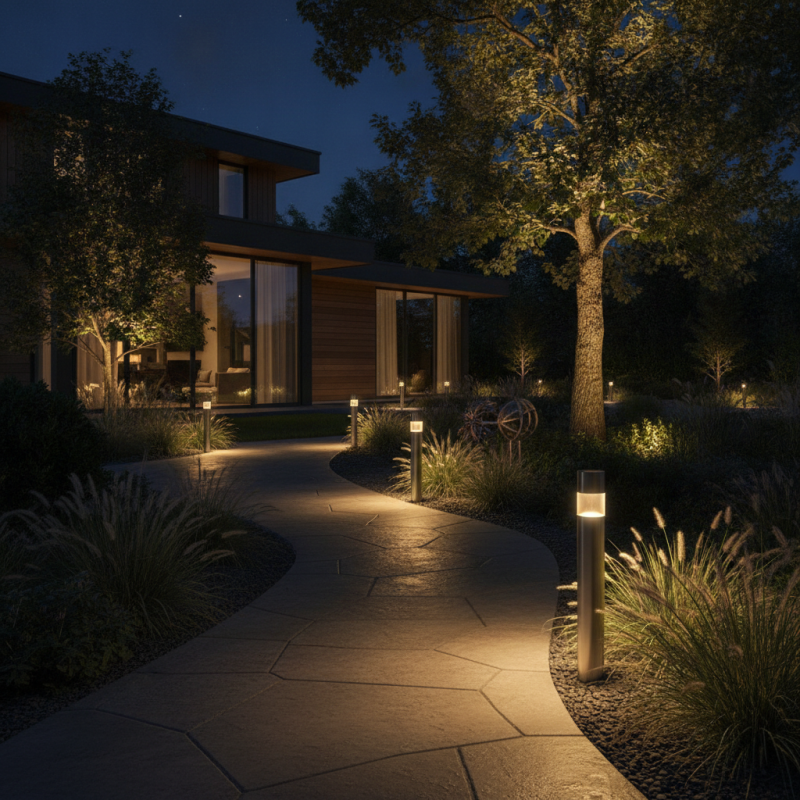
Solar garden lights serve multiple purposes, primarily enhancing outdoor aesthetics and providing safety. These lights leverage solar energy, making them an eco-friendly choice for homeowners. Recent reports indicate that the solar lighting market is expected to grow by 20% annually, reflecting a shift toward sustainable energy solutions. Homeowners increasingly seek ways to illuminate their gardens and pathways, promoting safety and reducing dark areas where intruders can hide.
When considering the effectiveness of solar garden lights for security, brightness is a key factor. Typically, these lights emit between 50 to 150 lumens, depending on the model. While this level can create a welcoming atmosphere and deter minor trespassing, it often falls short for comprehensive home security needs. For instance, a report from the American Society for Testing and Materials states that effective security lighting should provide at least 200 lumens in targeted areas. This discrepancy highlights a need for users to assess their specific requirements carefully.
Not all solar garden lights are designed equally. Some units may not withstand harsh weather conditions or may require frequent battery replacements. Moreover, their efficiency can diminish over time due to factors like cloud cover or seasonal changes. Thus, while solar lights can offer a charming glow and basic safety benefits, they may need to be complemented with additional security measures for more serious protection. Homeowners should weigh these aspects to ensure their lighting choices meet their security needs.
Solar garden lights are popular for their ease of use. However, many homeowners question their effectiveness for security purposes. Evaluating brightness levels is crucial. Typically, these lights operate on LED technology, providing varying brightness levels. Some emit as low as 50 lumens, while others offer over 300 lumens. This range can be insufficient for deterring intruders.
For effective home security, experts suggest a minimum of 700 lumens for outdoor lighting. Brightness not only illuminates the area but also creates a sense of safety. Even the brightest solar lights may struggle in low daylight conditions, affecting their performance. Many users find that rechargeable batteries do not hold their charge overnight.
Investing in quality lights with a higher lumen output can be beneficial. Frequent replacement of lower-quality lights leads to frustration. Evaluating the landscape is also important. Strategically placing lights near entry points can enhance security. Yet, relying solely on solar garden lights may not be enough. Combining them with other security measures is advisable for comprehensive safety.
When comparing solar garden lights to traditional security lighting, the differences in brightness and functionality are critical. Solar garden lights typically emit between 50 to 200 lumens, which can illuminate small areas effectively. However, this brightness may not deter intruders like traditional security lights, which often exceed 1,000 lumens.
A report by the Department of Energy suggests that traditional lighting can better cover expansive outdoor spaces. Solar lights rely on sunlight, limiting their effectiveness during long winter nights or cloudy days. However, they provide eco-friendly benefits and lower energy costs. An analysis showed that solar lights can reduce energy consumption by up to 80% compared to conventional bulbs.
Some homeowners may find solar lights inadequate for security. The gradual dimming of solar lights at night raises concern about visibility. Additionally, the installation of camera systems paired with bright security lights offers enhanced protection. While solar lights are a convenient option, they might not fulfill every security need in a home. A thorough evaluation of environmental conditions and security requirements is necessary before choosing lighting solutions.
When considering solar garden lights for home security, location and installation play critical roles. Brightness levels can vary significantly based on where these lights are placed. Positioning lights near pathways, entrances, or potentially dark corners can enhance visibility. However, if lights are too far from areas of concern, their effectiveness diminishes.
Installation height also matters. Lights mounted too low might not provide adequate coverage. Conversely, lights that are too high can result in poor illumination. Homeowners should assess their property layout carefully. The aim is to create a balanced light distribution. Factors like landscaping and existing structures must be taken into account.
While solar lights are eco-friendly and cost-effective, they are not foolproof. Their brightness can be affected by weather and sunlight exposure. This leads to variations in performance throughout the seasons. Homeowners might need to experiment with different setups. It takes time and observation to determine the best arrangement for effective security lighting.
| Light Type | Lumen Output | Effective Range (feet) | Best Installation Location | Average Cost ($) |
|---|---|---|---|---|
| LED Solar Light | 800 | 30 | Pathways | 35 |
| Motion Sensor Solar Light | 1000 | 40 | Driveways | 50 |
| Outdoor Flood Solar Light | 1200 | 50 | Garden Areas | 70 |
| Garden Spotlight | 600 | 25 | Highlight Landscape | 30 |
| Path Light | 200 | 15 | Sidewalks | 20 |
When considering home security, effective lighting plays a pivotal role. Solar garden lights, while energy-efficient, may not provide the necessary brightness for comprehensive security. According to a study from the Security Industry Association, 70% of potential intruders are deterred by well-lit properties. However, solar lights often emit lower lumens compared to traditional security lights, typically ranging from 10 to 100 lumens. This may not be sufficient for brightening up entry points and pathways.
Alternative solutions like LED floodlights can significantly improve visibility. These lights can produce 1,000 lumens or more, effectively illuminating larger areas. Motion sensor lights are another excellent option. They automatically activate upon detecting movement, startling potential intruders. An analysis from the National Institute of Justice found that homes equipped with motion-sensor lights saw a 30% decrease in break-ins.
While solar lights are great for ambiance and minor illumination, they should not be the sole security measure. The unpredictability of solar power, dependent on weather conditions, adds a layer of uncertainty. Diversifying your security lighting strategy—incorporating both solar and traditional options—can enhance safety effectively. This multifaceted approach ensures robust protection against unwanted intrusions.
: Solar garden lights usually emit between 50 to 300 lumens.
They might not be bright enough alone. A minimum of 700 lumens is recommended for security.
Their performance can diminish without sufficient sunlight, affecting brightness levels.
Many users find that these batteries often fail to hold a charge overnight.
LED floodlights and motion sensor lights can greatly enhance visibility and safety.
Strategically place lights near entry points for better security, but don’t rely solely on them.
Well-lit areas can deter 70% of potential intruders according to research.
No, they should be part of a diverse lighting strategy that includes traditional options.
Weather conditions can unpredictably impact their ability to collect sunlight and maintain charge.
Evaluate brightness needs and landscape, and combine various lighting types for the best results.
The article "Are Solar Garden Lights Bright Enough for Home Security?" explores the suitability of solar garden lights as a means for enhancing home security. It begins by defining solar garden lights and their primary function, which typically involves landscape enhancement rather than security. The evaluation of brightness levels reveals that while some solar lights offer sufficient illumination for decorative purposes, they may fall short of the brightness needed for effective security lighting.
The comparison between solar garden lights and traditional security lighting emphasizes the differences in intensity and coverage, with traditional lights generally providing more reliable security. The article also discusses how the placement and installation of these lights can significantly impact their effectiveness in deterring intruders. Finally, alternative solutions for improved home security lighting, such as motion sensors or integrated LED systems, are suggested to ensure a safer environment. Ultimately, the question "Are solar garden lights bright enough for security?" is addressed by highlighting their limitations and advocating for a comprehensive approach to home security lighting.

Glow Light