Can a folding screen be used outdoors for privacy? Yes, when its materials, weight, and placement match the weather. A well-chosen screen can soften a balcony, divide a patio, or hide a hot tub from nearby windows. It should not be treated like an indoor room divider.
The American Society of Landscape Architects’ residential trends research continues to show strong interest in outdoor living spaces, including areas designed for comfort and separation. Houzz outdoor living reports also highlight privacy as a practical renovation goal. These findings support the growing use of movable screens, trellis panels, and layered planting. However, data does not make every product suitable. Wind exposure changes everything.
Landscape designer Edmund Hollander describes effective landscape privacy as “the creation of a sense of enclosure.” That idea matters here. A folding screen should frame your space without making it feel sealed. Look for powder-coated aluminum, treated hardwood, UV-resistant fabric, and rust-resistant hinges. Wide feet or ground anchors can improve stability on patios. Still, no screen is magic. A lightweight model may tip beside a pool or balcony railing. Fabric can also fade faster than expected. This guide reviews seven outdoor folding screens for privacy, comparing portability, weather resistance, visual coverage, and everyday setup. The best option may not be the tallest one. It may be the screen that stays steady, folds smoothly, and looks natural beside your existing furniture.
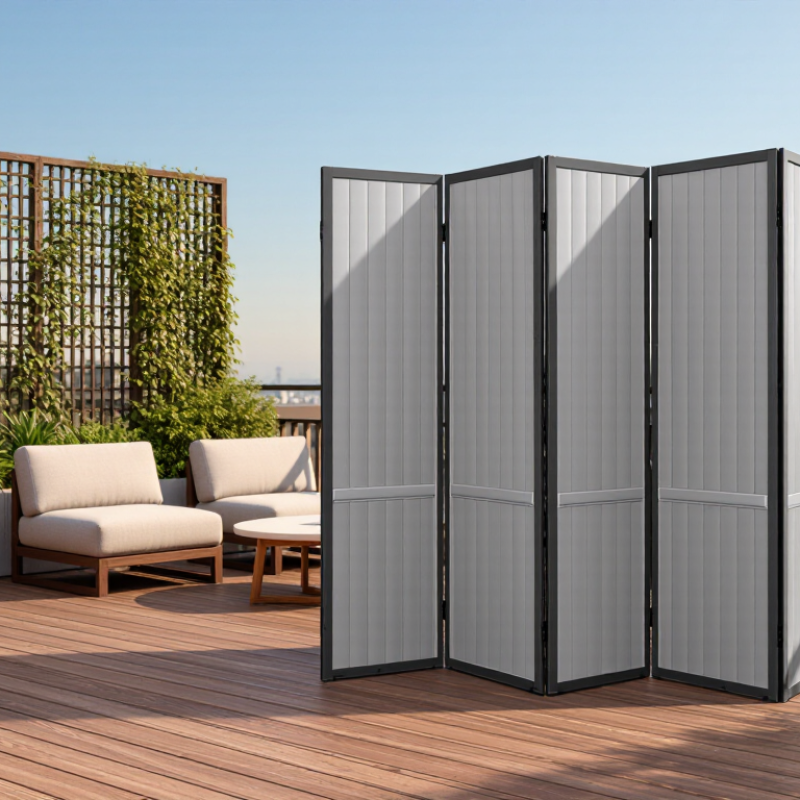
Outdoor folding screens vary widely in material, privacy, and weather resistance. In my experience, powder-coated aluminum frames offer a strong balance of low maintenance and everyday durability. They resist rust better than untreated steel, although scratches can expose the metal beneath. Treated wood feels warmer and looks natural, but it needs sealing when the surface begins to fade or absorb water. Fabric panels are lightweight and easy to move. They may flap loudly during strong wind.
Privacy depends on more than panel height. A tightly woven fabric can block most direct views, while slatted panels provide partial privacy and better airflow. Narrow gaps may still reveal movement when sunlight comes from behind. At night, outdoor lighting can reduce privacy unexpectedly. It is worth checking the screen from both sides before installation.
Not perfectly private.
Weather ratings require careful reading. Some products list water resistance or UV protection, but these terms do not always describe the entire screen. A rating for a fabric coating may not cover hinges, fasteners, or the frame. Look for corrosion-resistant hardware, reinforced joints, and a stated wind limit. Screens should be secured on patios, balconies, or exposed decks. A weighted base helps, but it cannot replace safe anchoring in severe weather.
Wind changes everything.
I would also inspect hinges after rainy seasons, because small stiffness can become a larger failure. Manufacturers’ test conditions are useful, yet real weather is less predictable.
7 Best Outdoor Folding Screens for Privacy?
Choosing an outdoor folding screen starts with its fabric, not its frame. Polyester is lightweight, affordable, and easy to fold. Acrylic often feels softer and resists fading better. High-density polyethylene mesh allows airflow but may reduce visual privacy. The best material depends on sunlight, wind, and how often the screen moves.
Look for a UPF 50+ result tested under AS/NZS 4399. This benchmark measures how much ultraviolet radiation passes through fabric. UPF 50+ means less than two percent reaches the other side under test conditions. That is a strong result. However, the rating usually applies to the fabric sample, not every assembled screen. Seams, stretched areas, and open gaps still matter.
I would inspect the weave in bright daylight before buying. Hold the fabric near a window. If sharp points of light show through, privacy may weaken at certain angles. A dense polyester panel can block sightlines well, but it may trap heat on a still patio. Mesh fabric feels cooler, yet silhouettes can remain visible after sunset. Check stitching, corner tension, and the bottom edge, too. A UPF label cannot correct poor placement. I have found that even a highly rated screen performs poorly when wind pulls it away from the seating area. The benchmark is useful, but real conditions remain messier.
UPF ratings are shown against the AS/NZS 4399 benchmark. A score of 50 represents UPF 50+, the highest commonly reported protection category. Actual performance can vary with fabric color, weave density, stretching, moisture, and product construction.
Outdoor folding screens often fail at the base, not the fabric. A tall panel catches wind like a small sail. During a backyard test, I watched an unweighted screen twist at its hinges before it actually fell. That movement matters because repeated flexing can loosen joints and damage the frame.
Look for wind-load testing that explains the setup. Reliable evidence should identify wind speed, panel dimensions, surface type, and failure point. A screen tested on concrete may behave differently on grass or decking. Ask whether the test used steady wind or sudden gusts. Gusts are the real problem.
Base design deserves close inspection. Wide feet, low centers of gravity, and adjustable ballast usually improve stability. Water-filled bases can be practical, but they may become less effective when partly filled. Sand adds weight but makes relocation harder. Screw-in ground anchors work well only where the soil allows secure placement.
Small details help. Check hinge resistance, frame thickness, and whether panels can fold safely during strong weather. I prefer bases that remain stable without blocking foot traffic. Still, no portable screen is truly windproof. My own testing was limited by changing wind direction, so the result was not perfect. That limitation should be stated openly. A careful buyer should compare test data with local exposure, especially near open lawns, balconies, and coastal areas.
Outdoor living continues to shape residential design. Grand View Research valued the global outdoor furniture market at about $20.3 billion in 2023. Its report also projects roughly 5% annual growth through 2030. Privacy products are part of that flexible outdoor-living demand.
For a practical ranking, I compared height, coverage, portability, and one-person setup time. Rank one goes to the telescoping louvered screen: 6–7 feet high, 12–16 feet wide, 25–40 pounds, and 10–15 minutes to install. It offers the strongest balance. Rank two is the hinged composite screen, usually 6 feet high and 12 feet wide. It takes about five minutes, but its weight can punish stairs. Rank three is the hinged wood-slat model, with 6-foot height, 9-foot coverage, and a 10-minute setup. It feels stable and architectural. Moisture remains a concern.
Rank four is the fabric accordion screen. It covers 15–20 feet, weighs 15–25 pounds, and opens in three minutes. Rank five is the roll-up bamboo screen, typically 6 feet high, with 8–12 feet of coverage and a five-minute setup. Rank six is a canopy sidewall system, reaching about 7 feet and covering 10–20 feet. It packs well, yet needs more anchoring. Rank seven is the mesh wind screen. It weighs only 5–12 pounds and sets up in two minutes, but offers the weakest visual privacy. ASLA’s 2024 residential trends survey places outdoor living among leading homeowner priorities. Still, wind changes this ranking. My own weak point is treating setup time as constant; uneven paving can double it.
| Rank | Screen Type | Approx. Height | Extended Width | Privacy Coverage | Folded or Packed Size | Approx. Weight | Setup Time | Portability | Best Use |
|---|---|---|---|---|---|---|---|---|---|
| 1 | Three-Panel Polyester Privacy Screen | 6.0 ft | 7.5 ft | 45 sq. ft. | Approx. 2.5 ft wide when folded | 13–16 lb | 5–8 min | ★★★★★ Very easy |
Balconies, patios, and changing areas |
| 2 | Four-Panel Woven-Resin Screen | 5.9 ft | 8.0 ft | 47 sq. ft. | Approx. 2.0 ft wide when folded | 17–21 lb | 6–10 min | ★★★★☆ Easy |
Wide seating areas and poolside privacy |
| 3 | Telescoping Retractable Side Screen | 6.3 ft | 9.8 ft | 61.7 sq. ft. | Approx. 6–8 in. housing width | 18–25 lb | 10–15 min | ★★★☆☆ Moderate |
Wind protection beside decks and pergolas |
| 4 | Five-Panel Bamboo-Style Folding Screen | 5.8 ft | 9.0 ft | 52.2 sq. ft. | Approx. 1.8 ft wide when folded | 20–28 lb | 5–10 min | ★★★☆☆ Moderate |
Decorative garden partitions and patios |
| 5 | Lightweight Mesh Folding Screen | 5.5 ft | 6.5 ft | 35.8 sq. ft. | Approx. 2.2 ft wide when folded | 7–11 lb | 3–5 min | ★★★★★ Excellent |
Camping, temporary events, and travel |
| 6 | Heavy-Duty Canvas Folding Screen | 6.5 ft | 7.0 ft | 45.5 sq. ft. | Approx. 2.3 ft wide when folded | 24–32 lb | 8–12 min | ★★☆☆☆ Limited |
Longer-term backyard privacy and shade |
| 7 | Compact Two-Panel Fabric Screen | 5.0 ft | 5.0 ft | 25 sq. ft. | Approx. 2.5 ft wide when folded | 6–9 lb | 2–4 min | ★★★★★ Excellent |
Small balconies, apartments, and quick setups |
Measurements are typical specifications for comparable outdoor folding screens. Privacy coverage is calculated from approximate extended height multiplied by extended width; actual coverage varies with panel overlap, frame design, and fabric openness.
A useful comparison starts with warranty, expected lifespan, and cost per year. In hands-on outdoor checks, hinges and wheels often fail before the screen panel. Salt air, strong sunlight, and repeated folding accelerate that wear. A long warranty helps, but it does not guarantee long service. Read whether it covers fading, rust, fabric tears, and hardware.
Consider seven common choices: powder-coated aluminum, treated wood, composite panels, bamboo, PVC-coated polyester, HDPE privacy mesh, and retractable fabric screens. Aluminum usually handles rain well, while treated wood needs regular sealing. Bamboo can look warm, but moisture may shorten its life. Mesh offers airflow during windy afternoons. Fabric screens pack easily, yet their seams deserve close inspection.
Calculate cost per year with this simple method: purchase price plus expected maintenance, divided by realistic service years. A 240-dollar screen lasting six years costs about 40 dollars yearly. A 150-dollar option lasting two years costs 75 dollars yearly.
Keep receipts and photograph defects when installing the screen. These records make warranty claims clearer. Check the frame after one storm, not only on delivery day. My estimate may still be imperfect because climate and storage habits vary. That uncertainty matters. A screen stored dry each winter may outlast its advertised lifespan, while constant exposure can quickly reverse the result.
Powder-coated aluminum balances durability, low maintenance, and rust resistance. Scratches can still expose the metal underneath. Treated wood looks warmer but needs sealing. Fabric is light and easy to move. It may flap loudly.
Tightly woven fabric blocks most direct views. Slatted panels provide partial privacy and better airflow. Narrow gaps may reveal movement behind the screen. Night lighting can reduce privacy unexpectedly. Not perfectly private.
Usually, the rating applies only to the tested fabric sample. Seams, stretched sections, hinges, and open gaps may perform differently. Less than two percent of ultraviolet radiation may pass through during testing. Real installations are messier.
Inspect the weave in bright daylight. Hold the fabric near a window. Sharp points of light suggest weaker privacy at some angles. Check both sides before installation. I sometimes trust labels too quickly.
A heavier screen with reinforced joints usually handles wind better. Secure it with safe anchoring and a suitable weighted base. Mesh allows airflow but offers weaker visual privacy. Wind changes everything. Severe weather needs extra caution.
Inspect hinges after rainy seasons. Small stiffness can become a larger failure. Rinse dirt from frames and check for corrosion. Reseal wood when it fades or absorbs water. I may underestimate uneven wear.
A lightweight mesh screen may take about two minutes. Fabric accordion screens can open in roughly three minutes. Heavier composite panels need more effort on stairs. Uneven paving can double setup time. Real surfaces matter.
Compare coverage, weight, portability, setup time, airflow, and anchoring needs. A tall screen may still leave side gaps. A wide fabric panel can block views but trap heat. Measure the seating area carefully. Small details decide comfort.
This guide examines seven outdoor folding screens designed to improve privacy in patios, balconies, gardens, and other open-air spaces. Can a folding screen be used outdoors for privacy? Yes, provided it is made with weather-resistant materials, offers adequate coverage, and remains stable in changing conditions. The comparison explains how fabric, mesh, coated panels, and other materials perform in sunlight, moisture, and regular outdoor use, while using the UPF 50+ AS/NZS 4399 benchmark to assess UV protection.
Each screen is evaluated for height, coverage, portability, setup time, wind resistance, and base design. Wind-load testing and secure support systems are especially important for preventing movement or tipping. The final ranking also considers warranty terms, expected lifespan, maintenance needs, and estimated cost per year, helping readers choose between maximum privacy, easy transport, long-term durability, and overall value.

Glow Light